


Introduction:
Dogs are some of the most beloved and cherished companions in our lives, providing love, loyalty, and endless joy. Among the diverse breeds that exist, the Bloodhound stands out for its remarkable history, distinctive appearance, and extraordinary scenting abilities. In this article, we will journey into the past to unravel the fascinating origins and rich history of the Bloodhound breed. From its ancient roots in medieval Europe to its modern-day role as a dedicated scent tracker, the Bloodhound has an intriguing story that deserves to be told.
The Bloodhound's history can be traced back thousands of years, making it one of the oldest known dog breeds. Its lineage can be traced to the St. Hubert Hound, a breed named after St. Hubert of Belgium, the patron saint of hunters. These dogs were prized for their exceptional scenting abilities and were highly valued by nobility and religious orders.
During the medieval period, the breeding and development of the Bloodhound were primarily undertaken by monks in monasteries. The monks selectively bred dogs with superior scent tracking skills, focusing on refining their sense of smell and endurance. The result was a dog that was highly skilled in tracking and trailing scents over long distances.
The Bloodhound made its way to England in the 11th century through the Normans. They recognized the breed's value in hunting and tracking, and it quickly gained popularity among the English nobility. The Bloodhound became well-established in England and gained a reputation for its unwavering determination and tenacity on the scent trail.
In addition to its hunting prowess, the Bloodhound's scent tracking abilities soon found a new application in law enforcement. Its exceptional sense of smell and unyielding determination made it an invaluable asset in tracking down criminals and fugitives. This led to the Bloodhound's extensive use in the pursuit of justice throughout Europe and the United States.
The Bloodhound breed was brought to America in the 1800s, where it found favor among American hunters and sportsmen. It also gained recognition for its service in law enforcement, aiding in the tracking of criminals and missing persons. To this day, Bloodhounds continue to serve in various specialized roles within law enforcement agencies across the United States.
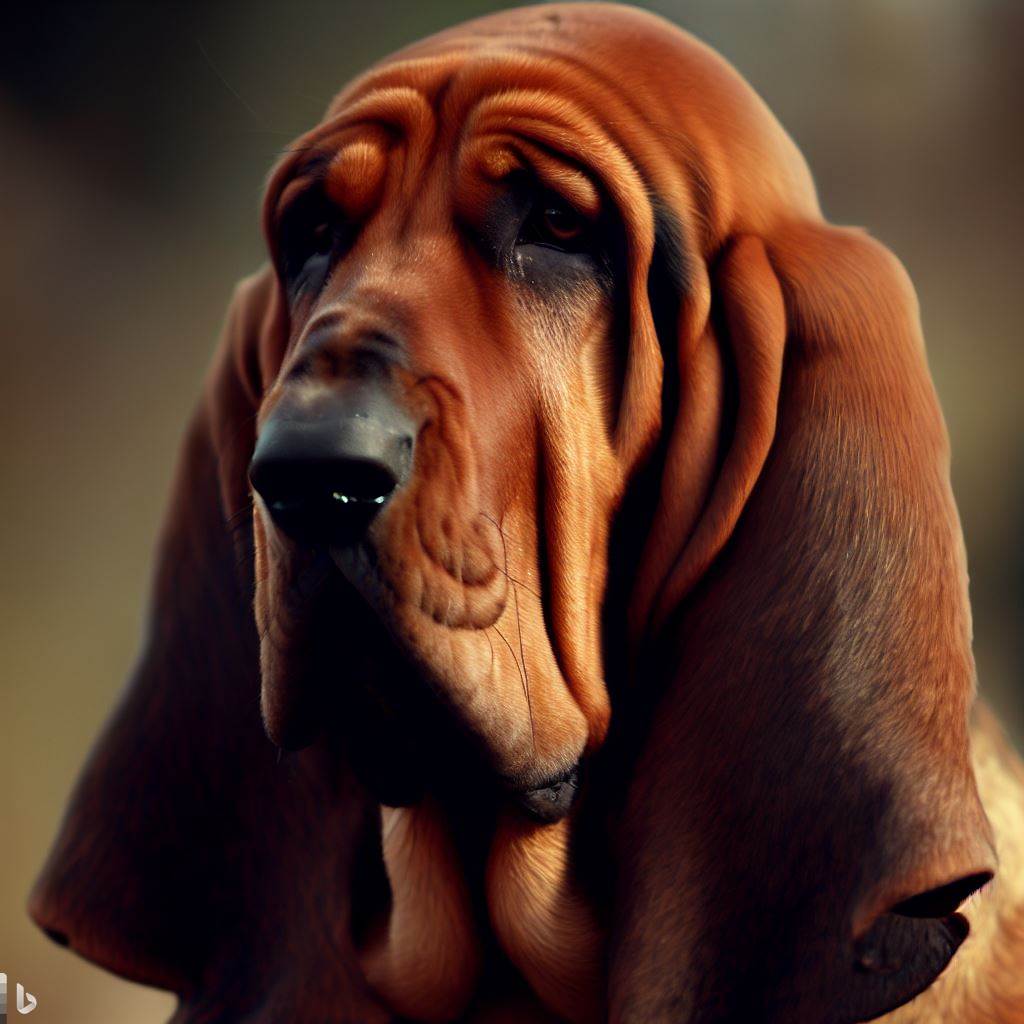
The Bloodhound is instantly recognizable for its distinctive appearance. With its droopy skin, wrinkled face, and long, pendulous ears, it has a unique and charming charm. Despite its large size, it possesses a gentle and affectionate nature, making it a beloved family pet. The breed's dense, short coat varies in color and often features a mix of black, tan, or liver tones.
One of the Bloodhound's most remarkable traits is its incomparable sense of smell. They possess an olfactory capability that surpasses that of most other dogs, making them exceptional scent trackers. Their scent receptors are highly developed, allowing them to detect and follow even the faintest of scents.
Bloodhounds have been utilized in various tracking and search operations. They excel in trailing lost individuals, fugitives, and missing persons, presenting an invaluable tool for search and rescue teams. Their incredible ability to identify and discern individual scents has aided in solving many criminal cases and locating individuals in need of assistance.
Conclusion:
The Bloodhound breed's history is a testament to their incredible abilities and the invaluable contributions they have made throughout the centuries. From their origins in medieval Europe to their modern-day role in law enforcement and search and rescue, the Bloodhound continues to inspire awe and admiration. Their distinctive appearance, exceptional scenting capabilities, and gentle nature make them a breed like no other. Whether as a loving family pet or a dedicated working companion, the Bloodhound's rich history and unwavering loyalty continue to captivate the hearts of dog enthusiasts worldwide.


.jpeg)
.jpeg)

.jpeg)